Home / Selecting your floor
Flooring guide by Evan Humphrey
Selecting your floor
What each flooring material costs, how long it lasts, and where it fails, from the person who installs them.
With so many options, it can feel overwhelming to make the right choice for your project.
Like most things, you get what you pay for. Some products offer much better longevity and bang for your buck. There may be some materials more appropriate for your application than others.
I always tell my clients that it often takes a similar amount of labor to install a poor quality floor as it takes to install a top of the line floor that will last many years. Why pay to install a floor twice? In most cases, it's prudent to spend the money once and enjoy maximum longevity of your floor.
Longevity and price range is based on my own experience. Of course, your experience may vary depending on the product, application, and usage.
Always check the warranty on your product. Longer warranty periods usually correlate to greater longevity, especially if they include a commercial warranty.
All photos here are of floors Evan has personally installed.
Flooring compared at a glance
| Material | Material price | Longevity | Best known for |
|---|---|---|---|
| Solid hardwood | $5 and up per square foot | 50 to 100 years or more if taken care of | Real wood. You can't beat the aesthetic. |
| "Fossilized" bamboo or eucalyptus | $5 to $8 per square foot | 50 to 100 years or more if taken care of | Also made from real wood. Each plank is unique. |
| Engineered hardwood | $3 to $5 per square foot | 25 to 50 years | Real wood veneer. |
| Vinyl plank | $2 to $4 per square foot | 25 to 50 years | Extremely durable surface and scratch-resistant. |
| Laminate | $1 to $3 per square foot | 10 to 25 years | Smooth surface, easy to clean. |
Price and longevity are from Evan's own experience. Yours may vary with the product, application and usage.
Solid hardwood
An old and reliable standby.
Solid hardwood has been used for hundreds of years and for good reason.
- Price range
- $5 and up per square foot. The more exotic, the more expensive. Maple and oak are some of the most commonly used.
- Longevity
- 50 to 100 years or more if taken care of.
Pros
- Real wood. You can't beat the aesthetic.
- Can be refinished, extending its life. A good quality hardwood floor can be refinished many times.
- Relatively easy, although time consuming, to install.
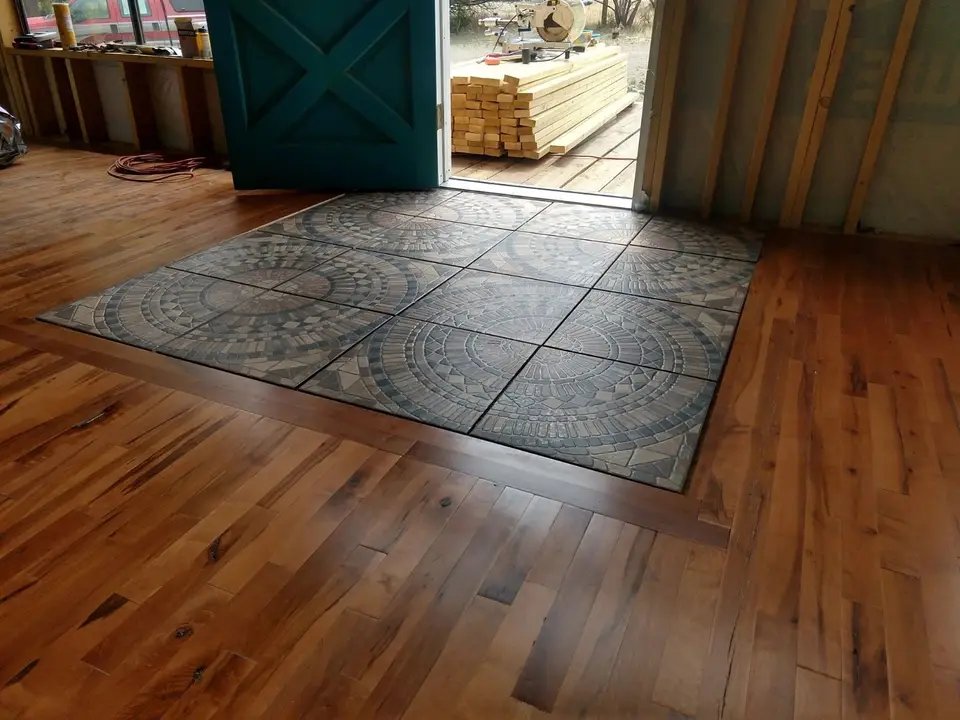
- Solid tongue and groove flooring lends itself to unique and creative patterns. You can create "herringbone" trim around obstacles like tile or other permanent fixtures, or introduce creative patterns in the main body of the floor.
Cons
- Cost and availability is the biggest con.
- Depending on species, the wood may be softer and more prone to scratching or denting.
- Some species are less water resistant than others. Special care must be taken anywhere water will be in regular contact.
- Prefinished flooring may show more gaps than you want. In some cases wax can be used to fill in these gaps.
- Consuming hardwood puts stress on the environment when it is not responsibly harvested.
"Fossilized" bamboo or eucalyptus
Extremely durable and unique product. My personal favorite!
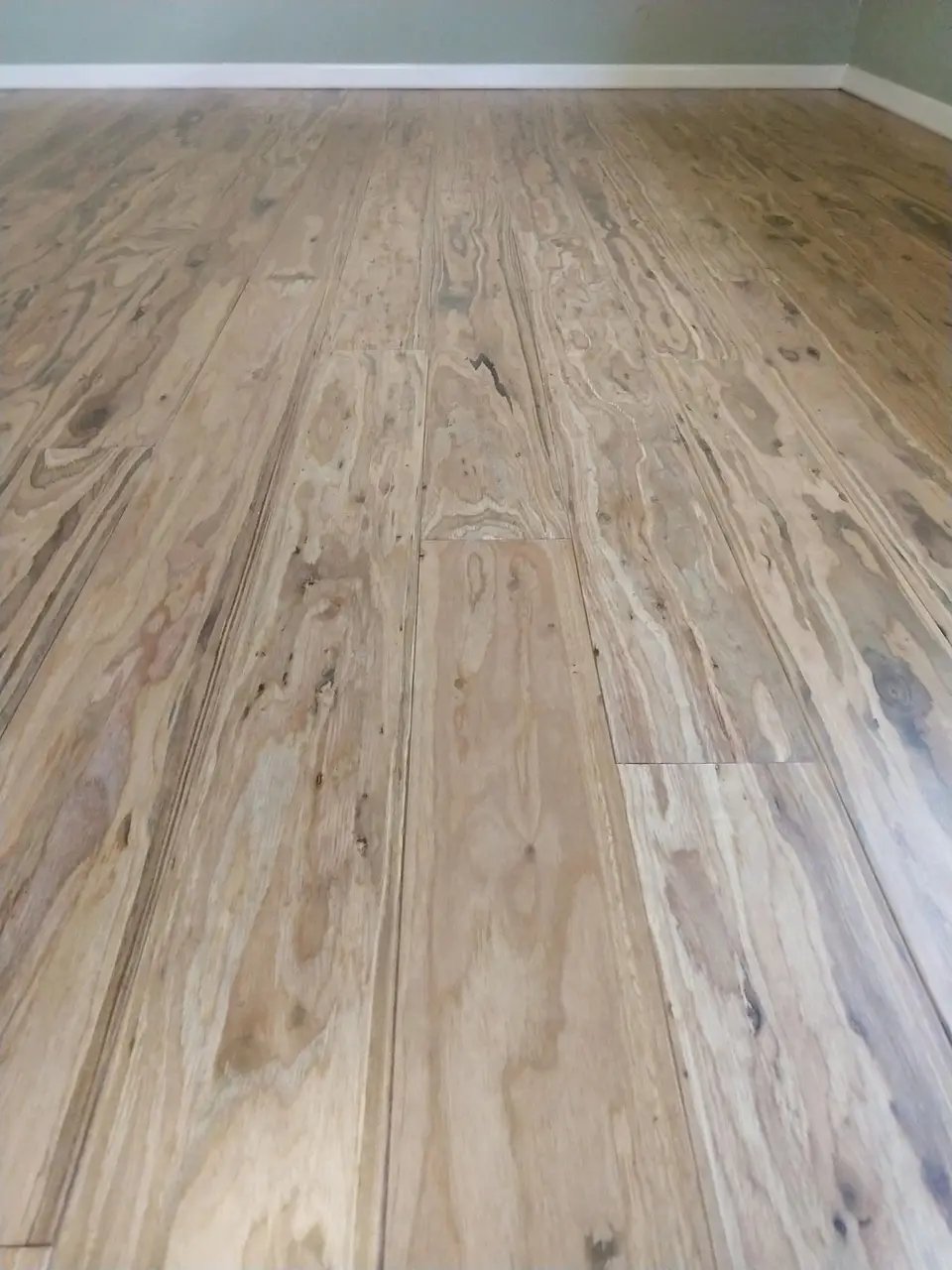
The fossilization process makes the wood planks extremely hard and durable, even harder than the hardest hardwoods. These floors are absolutely gorgeous and cost effective considering how long they last.
- Price range
- $5 to $8 per square foot.
- Longevity
- 50 to 100 years or more if taken care of.
Pros
- Also made from real wood. Each plank is unique.
- Sustainable and environmentally friendly.
- Extremely hard. Will not dent.
- More readily available than traditional hardwoods.
- Relatively easy, although time consuming, to install.
- Minor scratches can be filled with a colored wax filler.
- Virtually waterproof due to the treatment process.
Cons
- Cannot be sanded like a traditional hardwood. If damage is severe enough, individual planks must be replaced.
- In other cases, the surface can be repaired by polishing or re-coating with a special aluminum oxide finish.
- Pre-finished flooring may show more gaps than you want. Some gaps can be filled with wax, but otherwise you have to live with them.
Engineered hardwood
A real wood veneer with either a plywood or fiberboard core.
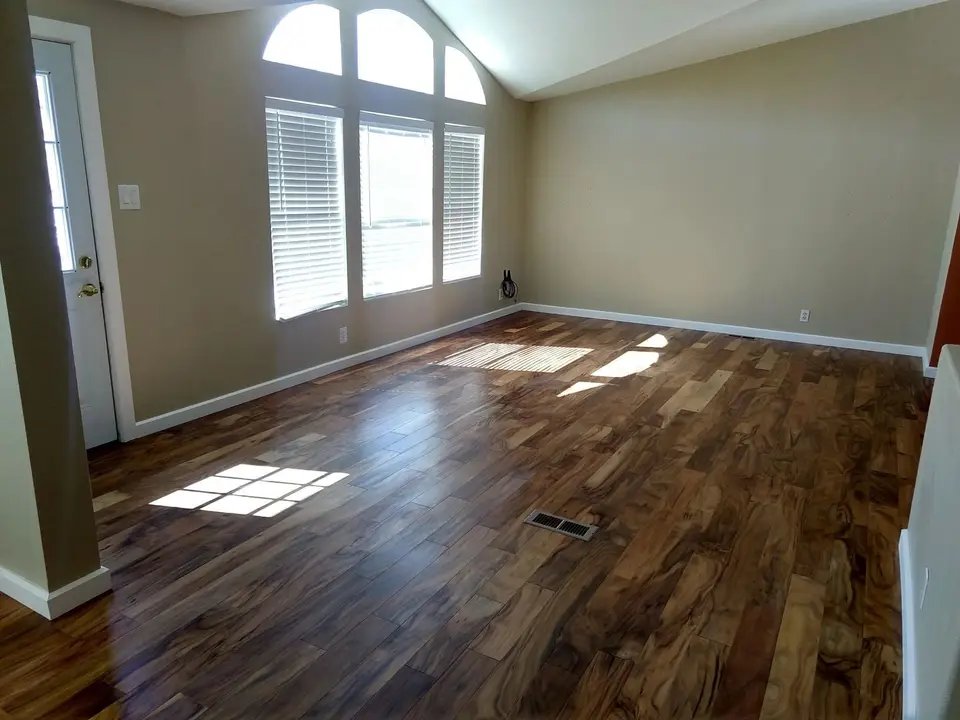
Engineered hardwood can be an affordable alternative to solid hardwood if you desire that real wood look but maybe you have a concrete slab subfloor. You might think of it as a more expensive version of laminate, as it has some of the same pros and cons.
The best "engineered hardwood" product actually has a bamboo veneer with a vinyl core.
- Price range
- $3 to $5 per square foot.
- Longevity
- 25 to 50 years.
Vinyl plank, laminate and engineered flooring in Silver City
Pros
- Real wood veneer.
- Typically less expansion and contraction than solid wood.
- Medium price point.
- Easy to install if it is a floating type.
- Some engineered products can also be nailed or glued. That allows for a more permanent installation, but also additional labor.
Cons
- The biggest con is that the wear layer is so thin. Being made of real wood, it's going to be softer than laminate or vinyl. Once this starts to wear out, there isn't much recourse but to replace it.
- Most engineered products have an aluminum oxide finish, which is hard but isn't advisable to refinish.
- Although some products are water resistant, being made of real wood means it can be vulnerable to water damage.
Vinyl plank
Vinyl plank is 100% waterproof, flexible, and durable.
Generally speaking, vinyl plank is a superior product to laminate. It is 100% waterproof and flexible, meaning it can handle wet areas as well as conform more easily to an uneven floor. It also is generally more expensive than laminate. Mohawk, Lifeproof, and Cali Bamboo all sell quality vinyl plank.
When purchasing vinyl plank, make sure to choose a product with a thick wear layer. Generally speaking, the thicker the vinyl plank the better. This is primarily because of how fragile the joints can be. Thicker planks usually correspond to stronger joints.
- Price range
- $2 to $4 per square foot.
- Longevity
- 25 to 50 years.
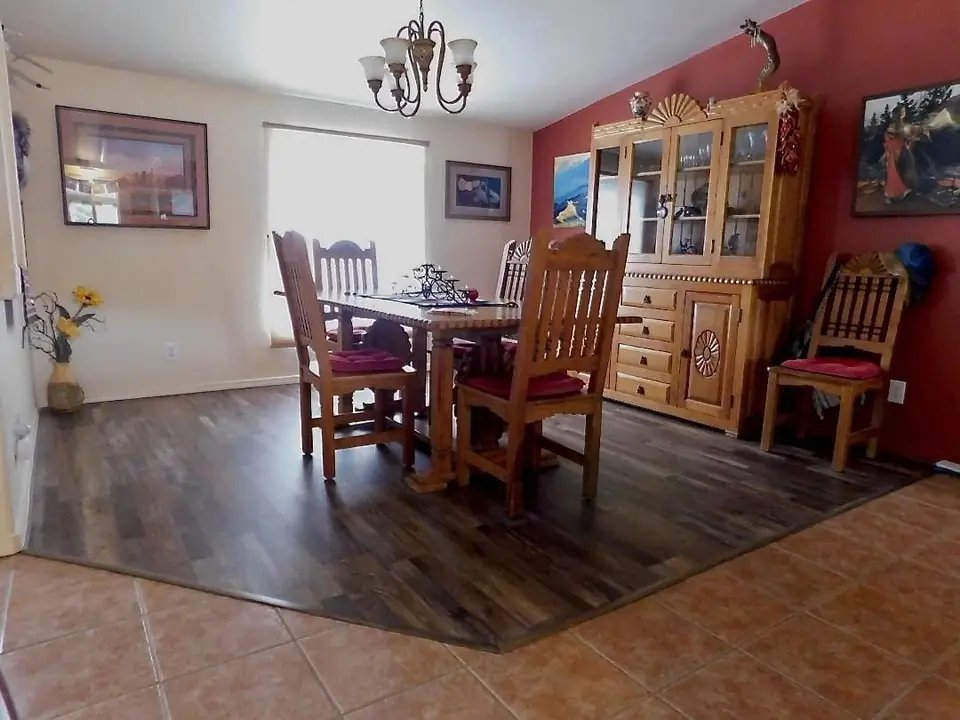
Vinyl plank, laminate and engineered flooring in Silver City
Pros
- Extremely durable surface and scratch-resistant.
- Impervious to water.
- Less expansion and contraction.
- Medium price point.
- Padding is usually attached, so no need for a separate underlayment, although I typically do recommend one.
- No acclimation time.
Cons
- Although the wear layer is durable, the joints are not. I consider this to be the biggest con to vinyl plank. Installation can be tricky because it is very easy to accidentally break these joints.
- Most vinyl plank products are very thin, which means you will be more likely to feel hard surfaces underneath. More expensive vinyls are thicker and have thicker padding.
- Being a veneer based product, vinyl plank can also be prone to chipping.
- Even though most products have a "wood look", it is difficult to find a product that doesn't look like plastic.
- Some vinyls are more difficult to keep clean due to being textured. I've also noticed some vinyls attract pet hair more easily, kind of having a static effect.
Laminate
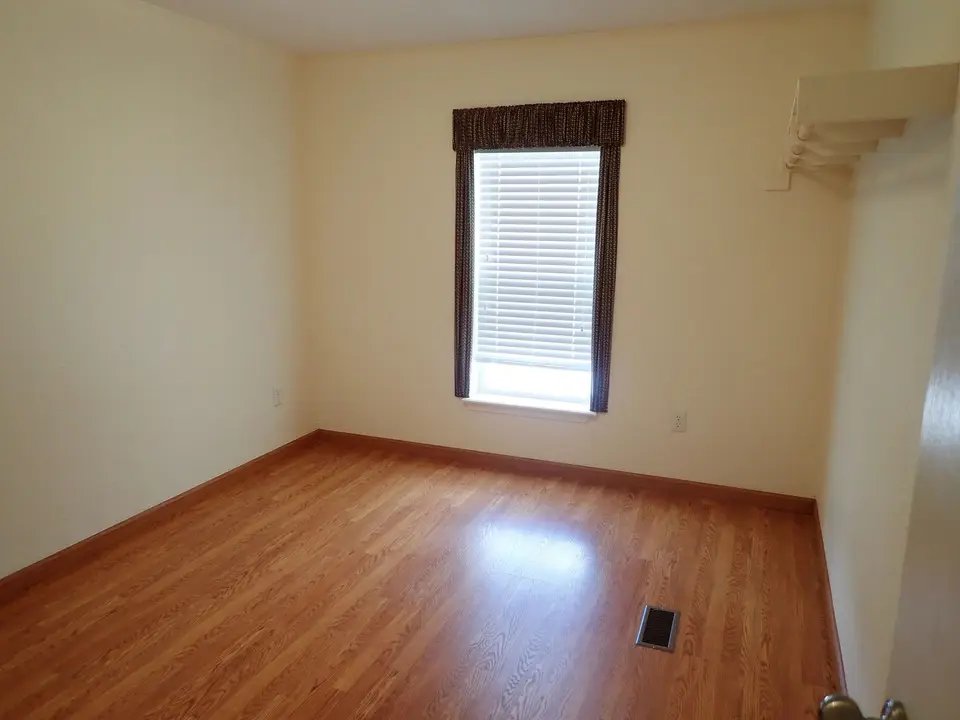
Laminate flooring typically consists of a fiberboard core with a hard wood-look veneer.
Not all laminates are created equal. I usually recommend Pergo brand. Otherwise the thicker laminates will last longer. Try to find a laminate that is water resistant. Laminate flooring is best if you are on a tight budget and have dry, level, low traffic rooms.
- Price range
- $1 to $3 per square foot.
- Longevity
- 10 to 25 years. Perhaps up to 50 years if a good quality product is installed correctly.
Vinyl plank, laminate and engineered flooring in Silver City
Pros
- Smooth surface, easy to clean.
- Scratch-resistant.
- Inexpensive relative to other types of floor coverings.
- Easy to install.
- Cushioned feel under the feet.
Cons
- Most laminates are not appropriate for rooms where water regularly contacts the floor, as it can cause the joints to swell or the planks themselves to warp and pull apart.
- Because the veneer is so hard and usually quite thin, it chips easily.
- Longevity is usually low on laminates, especially for high traffic areas.
- Lower quality laminates are especially brittle and will not hold up to regular use.
- In most cases, underlayment must be installed separately for laminates. This is an added labor expense, however a thick padded underlayment can also be a benefit.
Short answers
Flooring questions, answered
Which flooring lasts the longest?
Solid hardwood and fossilized bamboo or eucalyptus: 50 to 100 years or more if taken care of. Vinyl plank and engineered hardwood last 25 to 50 years, and laminate 10 to 25 years.
What is the cheapest flooring to install?
Laminate has the lowest material price, about $1 to $3 per square foot, but it has the shortest life and does not suit wet rooms. Labor is similar for a cheap floor and a good one.
What flooring is waterproof?
Vinyl plank is 100% waterproof. Fossilized bamboo and eucalyptus are virtually waterproof due to the treatment process. Laminate and engineered hardwood are vulnerable to water.
Which wood floors can be refinished?
Solid hardwood can be refinished many times. Engineered hardwood is usually not advisable to refinish, and fossilized bamboo or eucalyptus cannot be sanded like traditional hardwood.
How do I judge the quality of a flooring product?
Check the warranty. Longer warranty periods usually correlate to greater longevity, especially if they include a commercial warranty. For vinyl plank, choose a thick plank with a thick wear layer.
Start your project
Tell Evan about your floor.
Call, text or email for a rough estimate. A detailed bid includes a visit to your home in Silver City or Grant County.